

AI in Healthcare: How Artificial Intelligence Is Saving Lives and Reshaping Medicine in 2026
From detecting cancer earlier than any human doctor to accelerating drug discovery from decades to years — AI in Healthcare is not a future promise. It is a present reality transforming every corner of medicine right now.
AI in Healthcare is one of the most profound and consequential technology shifts of our generation. Across every dimension of medicine — how diseases are detected, how drugs are discovered, how patients are monitored, how surgeries are performed, how hospitals are managed, and how individuals take ownership of their own health — artificial intelligence is delivering capabilities that were simply not possible before, and doing so at a pace that is accelerating every year. In 2026, AI in Healthcare has moved decisively beyond pilot programs and proof-of-concept demonstrations. It is embedded in clinical workflows, operating inside diagnostic systems used by millions of patients, and driving research breakthroughs that are reshaping our understanding of disease at the molecular level.
The stakes could not be higher. Healthcare systems around the world are under enormous strain — aging populations, rising chronic disease burdens, critical workforce shortages, and cost pressures that are pushing institutions to their limits. AI is not a silver bullet that solves all of these problems overnight. But it is a force multiplier of extraordinary power that can help clinicians see more clearly, researchers work faster, administrators operate more efficiently, and patients stay healthier with more personalized, proactive care than the current system could ever deliver at scale.
In this article, we take a comprehensive look at where AI in Healthcare stands today — the breakthroughs, the real-world deployments, the genuine challenges, and what the next few years are likely to bring for patients, providers, and anyone building in the healthcare technology space.
Why AI in Healthcare Has Reached a Critical Turning Point
Artificial intelligence has been discussed as a potential healthcare revolution for over a decade. What is different in 2026 is that the conversation has shifted from potential to proof. Several converging developments have pushed AI in Healthcare past the tipping point from promising experiment to clinical reality:
Data at Unprecedented Scale
Healthcare generates more data than virtually any other sector — medical imaging, genomic sequences, electronic health records, wearable sensor streams, clinical trial results, published research, and real-world treatment outcomes. For most of the past century, the vast majority of this data sat in siloed, incompatible systems where it could inform individual clinical decisions but could never be analyzed at population scale. The combination of electronic health record adoption, imaging digitization, genomic sequencing cost reductions, and wearable health monitoring has created datasets of sufficient scale and richness that AI models can be trained with genuine clinical power.
Algorithmic Breakthroughs
The deep learning advances that have transformed AI across other domains have proven equally powerful in healthcare. Convolutional neural networks trained on millions of medical images have demonstrated diagnostic accuracy that matches or exceeds specialist physicians on specific imaging tasks. Transformer architectures have enabled AI systems to process and synthesize vast bodies of medical literature, patient records, and genomic data in ways that generate genuinely novel clinical insights. Alpha Fold’s solution to the protein structure prediction problem — one of biology’s hardest challenges — demonstrated that AI can crack scientific problems that had resisted human efforts for fifty years.
Regulatory Maturation
Regulatory agencies including the US Food and Drug Administration and the European Medicines Agency have developed clearer frameworks for evaluating and approving AI-based medical devices and diagnostic tools. The number of FDA-cleared AI medical devices has grown from a handful in 2018 to over a thousand by 2026. This regulatory clarity has unlocked significant investment and accelerated the path from research to clinical deployment for AI healthcare applications.
AI in Healthcare Diagnostics: Seeing What Human Eyes Miss
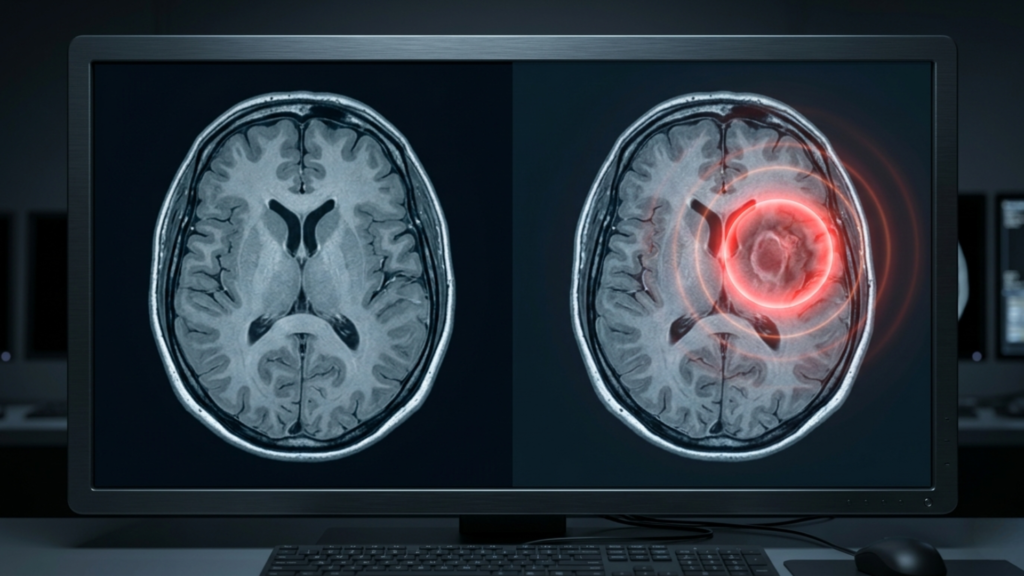
Medical imaging is where AI in Healthcare has achieved its most dramatic and well-documented clinical results. The ability of AI systems to analyze images with consistency, speed, and sensitivity that complements and in some cases surpasses human experts is saving lives in concrete, measurable ways:
Cancer Detection
AI systems trained on millions of mammograms, CT scans, pathology slides, and dermatology images are detecting cancers at earlier stages than traditional screening programs — when treatment is most effective and survival rates are highest. Google’s studies on AI-powered mammography screening found that AI reduced false negatives significantly compared to standard radiologist review. AI-powered pathology systems analyze tissue slides at cellular resolution, identifying subtle features of malignancy that are easy to miss in the volume of slides a human pathologist reviews each day. In dermatology, AI systems analyzing skin lesion photographs have demonstrated diagnostic accuracy for melanoma that matches board-certified dermatologists.
Cardiovascular Disease
Heart disease remains the leading cause of death globally, and early detection is the single most powerful intervention available. AI systems analyzing electrocardiograms can detect conditions including atrial fibrillation, heart failure, and early signs of cardiomyopathy from a standard 12-lead ECG — often identifying risk markers that standard clinical interpretation misses. Apple Watch’s ECG feature has already detected atrial fibrillation in users who had no previous symptoms, in some cases prompting clinical evaluation that revealed serious underlying conditions in time for effective treatment.
Radiology and Medical Imaging Workflow
Beyond specific disease detection, AI is transforming radiology workflow broadly. AI triage systems analyze incoming imaging studies and flag the most urgent cases for immediate radiologist review — ensuring that a critical finding on a brain scan is never delayed because it arrived at the bottom of a long queue. AI pre-reading systems annotate images before radiologist review, highlighting areas of concern and suggesting differential diagnoses that help radiologists work faster and more accurately. These workflow improvements are particularly valuable given the severe shortage of radiologists in many healthcare systems worldwide.

AI in Healthcare Drug Discovery: From Decades to Years
Drug discovery has historically been one of the slowest, most expensive, and most failure-prone processes in all of human enterprise. Developing a new drug from initial discovery to regulatory approval typically takes ten to fifteen years and costs over a billion dollars — and the vast majority of candidate compounds fail before reaching patients. AI in Healthcare is fundamentally restructuring this process:
Target Identification and Validation
The first step in drug discovery is identifying a biological target — typically a protein whose malfunction is involved in a disease — and validating that modifying it will produce a therapeutic effect without unacceptable side effects. AI systems can analyze genomic data, protein interaction networks, and disease biology at a scale and speed impossible for human researchers, identifying promising targets that would never have emerged from traditional laboratory-based approaches. DeepMind’s Alpha Fold has predicted the three-dimensional structure of virtually every known protein — a dataset that has fundamentally accelerated target identification across the entire pharmaceutical industry.
Molecular Design and Optimization
Once a target is identified, AI generative models can design candidate drug molecules with specified properties — binding affinity to the target, selectivity against off-target proteins, solubility, metabolic stability — exploring chemical space of almost unimaginable size far faster than traditional medicinal chemistry approaches. Insilco Medicine used AI to identify a novel drug candidate for a difficult fibrotic lung disease and advance it to clinical trials in approximately eighteen months — a process that typically takes four to five years. Recursion Pharmaceuticals has built an AI-powered drug discovery platform that has generated one of the largest proprietary biological and chemical datasets in the world, enabling a scale of discovery impossible in traditional laboratory settings.
Clinical Trial Optimization
Clinical trials — the process of testing drug safety and efficacy in human populations — account for the majority of drug development cost and time. AI is improving clinical trial efficiency at multiple stages: identifying the right patient populations for trials using electronic health record data, predicting which patients are most likely to respond to treatment, monitoring for safety signals faster, and optimizing trial designs to reach statistical significance with smaller, more focused patient populations. These improvements are compressing timelines and reducing the enormous cost of failed trials.
AI in Healthcare: Personalized Medicine and Genomics
One of the most transformative long-term promises of AI in Healthcare is the shift from population-level medicine — where treatment decisions are based on what works for the average patient — to truly personalized medicine, where every clinical decision is informed by the unique biological characteristics of the individual patient.
Genomic sequencing costs have fallen from over a billion dollars per genome in 2001 to under a hundred dollars in 2026, making individual genomic profiling economically practical at population scale. AI systems that can integrate a patient’s genomic data with their clinical history, current medications, lifestyle factors, and real-time physiological measurements are enabling a level of personalization that was simply not achievable before.
In oncology — where the genetic profile of a tumor determines which treatments will be effective and which will cause harm without benefit — AI-powered genomic analysis is already changing clinical practice. AI systems analyze tumor genomic sequencing data to identify actionable mutations, predict which targeted therapies the tumor is likely to respond to, and flag potential resistance mechanisms before treatment begins. This precision approach is producing better outcomes for cancer patients while sparing them from the side effects of treatments unlikely to help them.
The future of medicine is not treating the disease — it is treating the person who has the disease. AI in Healthcare is making that precision possible at clinical scale for the first time.
AI in Healthcare: Wearables, Remote Monitoring, and Preventive Care
The most impactful long-term contribution of AI in Healthcare may not be in hospitals and research laboratories — it may be in the continuous monitoring and preventive care that keeps people out of hospitals in the first place.
Continuous Health Monitoring
The convergence of powerful wearable sensors — smartwatches, continuous glucose monitors, implantable cardiac monitors, smart rings — with AI-powered analysis is creating a new paradigm of continuous, personalized health monitoring. These devices collect a constant stream of physiological data — heart rate variability, blood oxygen levels, glucose trends, sleep patterns, activity levels, skin temperature — and AI systems analyze this data to detect early warning signs of deteriorating health before symptoms become apparent. Studies have demonstrated that AI analysis of smartwatch data can detect early signs of conditions including atrial fibrillation, type 2 diabetes onset, sleep apnea, and even early depression — days or weeks before traditional clinical presentation.
Remote Patient Monitoring
For patients with chronic conditions — heart failure, diabetes, COPD, hypertension — regular monitoring of key health parameters traditionally required frequent clinic visits or hospitalization. AI-powered remote patient monitoring platforms allow these patients to be tracked continuously from home, with AI systems analyzing their data, flagging concerning trends, and alerting clinical teams when intervention is needed — before a routine fluctuation becomes an emergency hospitalization. Healthcare systems deploying these platforms are reporting significant reductions in hospital readmission rates and emergency department visits for their chronic disease patient populations.
Preventive Health and Behavioral Intervention
AI-powered health applications are increasingly moving from reactive health management to proactive health promotion — analyzing individual behavior patterns, identifying risk factors before they manifest as disease, and delivering personalized interventions designed to change health trajectories before problems develop. This shift from sick care to health care represents a fundamental change in the economic and clinical model of healthcare delivery, and AI is the enabling technology that makes personalized preventive intervention scalable.
Challenges Facing AI in Healthcare That Cannot Be Ignored
The promise of AI in Healthcare is real and substantial — but so are the challenges that must be addressed for that promise to be fully realized:
- Data privacy and security: Healthcare data is among the most sensitive personal information that exists. The large, rich datasets required to train effective AI models create significant privacy risks — from data breaches, re-identification of supposedly anonymized records, and the potential for sensitive health information to be used in ways patients have not consented to. Federated learning approaches that train AI models without centralizing patient data represent a promising technical solution, but governance frameworks are still maturing.
- Algorithmic bias and health equity: AI models trained on historical healthcare data inherit the biases embedded in that data — including longstanding disparities in how different demographic groups have been diagnosed and treated. An AI diagnostic system that performs excellently on the population it was trained on but poorly on underrepresented groups can exacerbate health inequities rather than reducing them. Rigorous bias testing across demographic groups and diverse, representative training datasets are not optional features — they are clinical and ethical requirements.
- Clinical validation and regulatory approval: The path from a promising AI algorithm to an approved clinical tool deployed in real healthcare settings is long, expensive, and appropriately rigorous. The evidence standards for clinical AI are still evolving, and the regulatory frameworks vary significantly across jurisdictions. Organizations developing healthcare AI must invest heavily in clinical validation studies designed to the standards required for regulatory approval in their target markets.
- Clinician adoption and workflow integration: Even the most technically impressive AI diagnostic tool delivers no clinical value if clinicians do not trust it, understand it, or integrate it into their workflow. The history of healthcare technology is littered with examples of excellent tools that were poorly adopted because they disrupted clinical workflow rather than enhancing it. Successful AI deployment in healthcare requires deep co-design with clinicians and careful workflow integration.
- Explainability in clinical decision-making: When an AI system recommends a diagnosis or treatment, clinicians and patients have legitimate needs to understand the basis for that recommendation. Black-box AI systems that cannot explain their reasoning create legal, ethical, and practical barriers to adoption in high-stakes clinical contexts. Explainable AI techniques that make AI reasoning interpretable to clinicians are an active research priority.
The Future of AI in Healthcare: What the Next Five Years Will Bring
The current state of AI in Healthcare, impressive as it is, represents only the early chapters of a much longer story. Here is where the field is heading:
Foundation Models for Medicine
Just as large foundation models have transformed general AI capability, medicine-specific foundation models trained on vast multimodal healthcare datasets — imaging, genomics, clinical records, medical literature — are emerging as a new class of clinical AI. These models, exemplified by early versions of systems like Google’s Med Palm and Microsoft’s Biomed BERT successors, have the potential to serve as general-purpose clinical intelligence platforms capable of supporting a wide range of diagnostic and decision support tasks rather than narrow single-task tools.
AI-Powered Surgical Robotics
Surgical robotics systems are increasingly incorporating AI to enhance precision, provide real-time guidance, and expand the capabilities of surgeons in ways that go beyond current robotic assistance. AI systems that can recognize anatomical structures, identify planes of dissection, detect bleeding, and provide real-time feedback on surgical technique are moving from research to early clinical deployment. The long-term vision of AI-assisted surgery — where the combined intelligence of a skilled human surgeon and an AI system produces outcomes neither could achieve alone — is becoming increasingly concrete.
Digital Twins in Medicine
A medical digital twin is a computational model of an individual patient’s physiology — built from their genomic data, medical history, imaging, and continuous monitoring data — that can be used to simulate how that specific patient will respond to different treatments before any intervention is tried in the real world. Digital twin technology is still early but advancing rapidly, with particular promise in cardiology, oncology, and the management of complex chronic diseases.
Final Thoughts: AI in Healthcare Is the Most Important Technology of Our Era
Of all the domains where artificial intelligence is creating impact, healthcare may be the one that matters most — because the stakes are human lives, health, and suffering at global scale. The progress that AI in Healthcare has already achieved is remarkable: cancers detected earlier, drugs discovered faster, patients monitored more continuously, and clinical decisions made with richer information than any previous generation of medicine could access.
But we are still at the beginning. The full realization of AI’s potential in medicine — truly personalized treatment for every patient, drug discovery accelerated to a fraction of current timelines, preventive care that dramatically reduces the burden of chronic disease, and clinical intelligence that is available to every patient regardless of geography or economic circumstance — is a vision that will take decades to fully achieve.
The organizations, researchers, and policymakers that invest in building the right foundations now — robust data infrastructure, rigorous validation frameworks, equitable and privacy-respecting AI development practices, and deep clinical collaboration — will be the ones that determine whether that vision is realized for everyone or only for the privileged few. There is no more important technology investment the world can make.
Foundation Models for Medicine
Just as large foundation models have transformed general AI capability, medicine-specific foundation models trained on vast multimodal healthcare datasets — imaging, genomics, clinical records, medical literature — are emerging as a new class of clinical AI. These models, exemplified by early versions of systems like Google’s Med Palm and Microsoft’s Biomed BERT successors, have the potential to serve as general-purpose clinical intelligence platforms capable of supporting a wide range of diagnostic and decision support tasks rather than narrow single-task tools.
AI-Powered Surgical Robotics
Surgical robotics systems are increasingly incorporating AI to enhance precision, provide real-time guidance, and expand the capabilities of surgeons in ways that go beyond current robotic assistance. AI systems that can recognize anatomical structures, identify planes of dissection, detect bleeding, and provide real-time feedback on surgical technique are moving from research to early clinical deployment. The long-term vision of AI-assisted surgery — where the combined intelligence of a skilled human surgeon and an AI system produces outcomes neither could achieve alone — is becoming increasingly concrete.
Digital Twins in Medicine
A medical digital twin is a computational model of an individual patient’s physiology — built from their genomic data, medical history, imaging, and continuous monitoring data — that can be used to simulate how that specific patient will respond to different treatments before any intervention is tried in the real world. Digital twin technology is still early but advancing rapidly, with particular promise in cardiology, oncology, and the management of complex chronic diseases.
Final Thoughts: AI in Healthcare Is the Most Important Technology of Our Era
Of all the domains where artificial intelligence is creating impact, healthcare may be the one that matters most — because the stakes are human lives, health, and suffering at global scale. The progress that AI in Healthcare has already achieved is remarkable: cancers detected earlier, drugs discovered faster, patients monitored more continuously, and clinical decisions made with richer information than any previous generation of medicine could access.
But we are still at the beginning. The full realization of AI’s potential in medicine — truly personalized treatment for every patient, drug discovery accelerated to a fraction of current timelines, preventive care that dramatically reduces the burden of chronic disease, and clinical intelligence that is available to every patient regardless of geography or economic circumstance — is a vision that will take decades to fully achieve.
The organizations, researchers, and policymakers that invest in building the right foundations now — robust data infrastructure, rigorous validation frameworks, equitable and privacy-respecting AI development practices, and deep clinical collaboration — will be the ones that determine whether that vision is realized for everyone or only for the privileged few. There is no more important technology investment the world can make.
Internal Resources
Read More about AI-Powered Cybersecurity
External Resources
NIH artificial intelligence strategy